
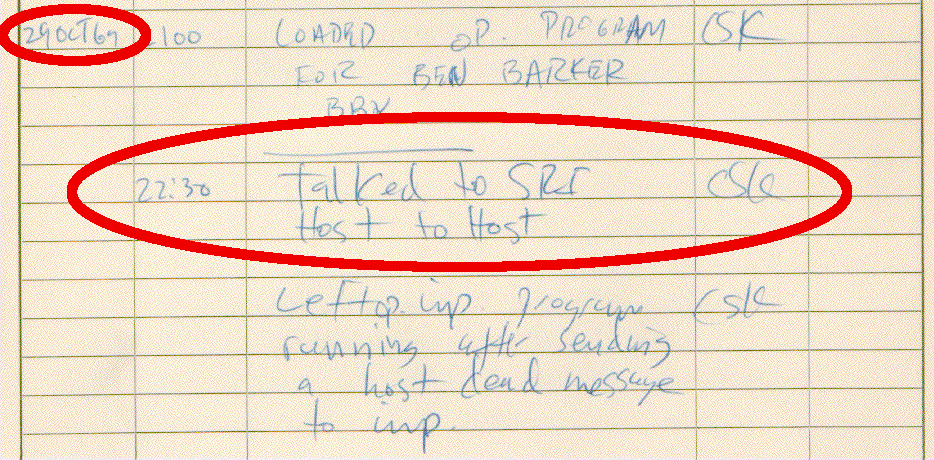
 When you think back to a time without the Internet, it is sometimes hard to remember for some and for others the Internet has always been here. Have you ever wondered what was the first communication between computers? lo. Yes, “lo” was the first transmission in October 1969! The actual word was “login” but the system crashed after the first two letters were transmitted. Sometimes a crashing failure is just the beginning of a whole new world!
Being an 80’s teen, I can definately remember life without the Internet especially as mainstream as it is now-a-days. Can you believe that only 1% of information flowing through two way communication in 1993 was from the Internet? By 2000 this had increased to 51% which was right before the term “web 2.0” was coined by Tim O’Reilly in 2004. This marked the beginning of a dramatic shift in the Internet. By 2007 this number was increased to 97%. Wow, what a difference!
This shift from a read only web, Web 1.0, to a read write web, Web 2.0, has made a dramatic impact on web design. In the past, the ability to design websites was limited to those with the ability to code using language such as html. When the shift of the Internet first started, software was being produced to allow people to create websites with no code experience. People with experience in common software such as PowerPoint could have a website. Other software such as FrontPage and Dreamweaver was produced for even more control over the design elements.
This Techie Tiders website is a great example of how the shift of the Internet has opened the world of web design to anyone. Using blogs, wikis, and numerous other online tools allow even people with just basic computer knowledge to have a presence on the web. Even social networks such as Facebook are being used for websites.
How else has this Internet shift helped web design? Just a few years back you would need to purchase software to create dynamic text, edit photos, and so on. Now you have numerous sites from which to choose. A great example of this is Photoshop software. There are dozens of site that now allow you to edit photos or create your own images such as Pixlr. There are tons of other examples. What other ways has Web 2.0 had an effect on web design?